In the bustling world of kitchen tools, where countless blades promise culinary perfection, the Misen knife has carved out a unique and respected niche. It champions the idea that exceptional performance shouldn’t come with an exorbitant price tag, making high-quality kitchen essentials accessible to home cooks and aspiring chefs alike. If you’ve been on the hunt for a blade that balances precision, durability, and affordability, understanding the Misen knife could be a game-changer for your kitchen.
The Heart of the Blade: Materials and Craftsmanship
At the core of every Misen knife lies a commitment to thoughtful design and robust materials. Misen knives primarily feature blades crafted from AUS-10 Japanese steel, a high-carbon alloy celebrated for its impressive balance of sharpness and resilience. This isn’t just any steel; it boasts a carbon content significantly higher than many “premium” knives, which translates directly into a blade that stays sharper for longer periods and is less prone to brittleness compared to some ultra-hard Japanese counterparts.
The blade’s edge is meticulously ground to a razor-sharp 15-degree angle per side, totaling 30 degrees. This acute angle is sharper than many traditional Western-style knives, allowing for incredibly precise and effortless cuts through everything from delicate herbs to tough root vegetables. This blend of German and Japanese design philosophies offers a versatile tool that excels at a wide range of kitchen tasks, from rock chopping to fine slicing.
Beyond the steel, Misen ensures structural integrity with a full-tang construction, where the blade metal extends through the entire length of the handle. This critical feature, often seen in high-end knives, contributes significantly to the knife’s overall balance and durability, providing a sense of confidence and control with every chop and slice.
Designed for Comfort and Control: The Misen Handle
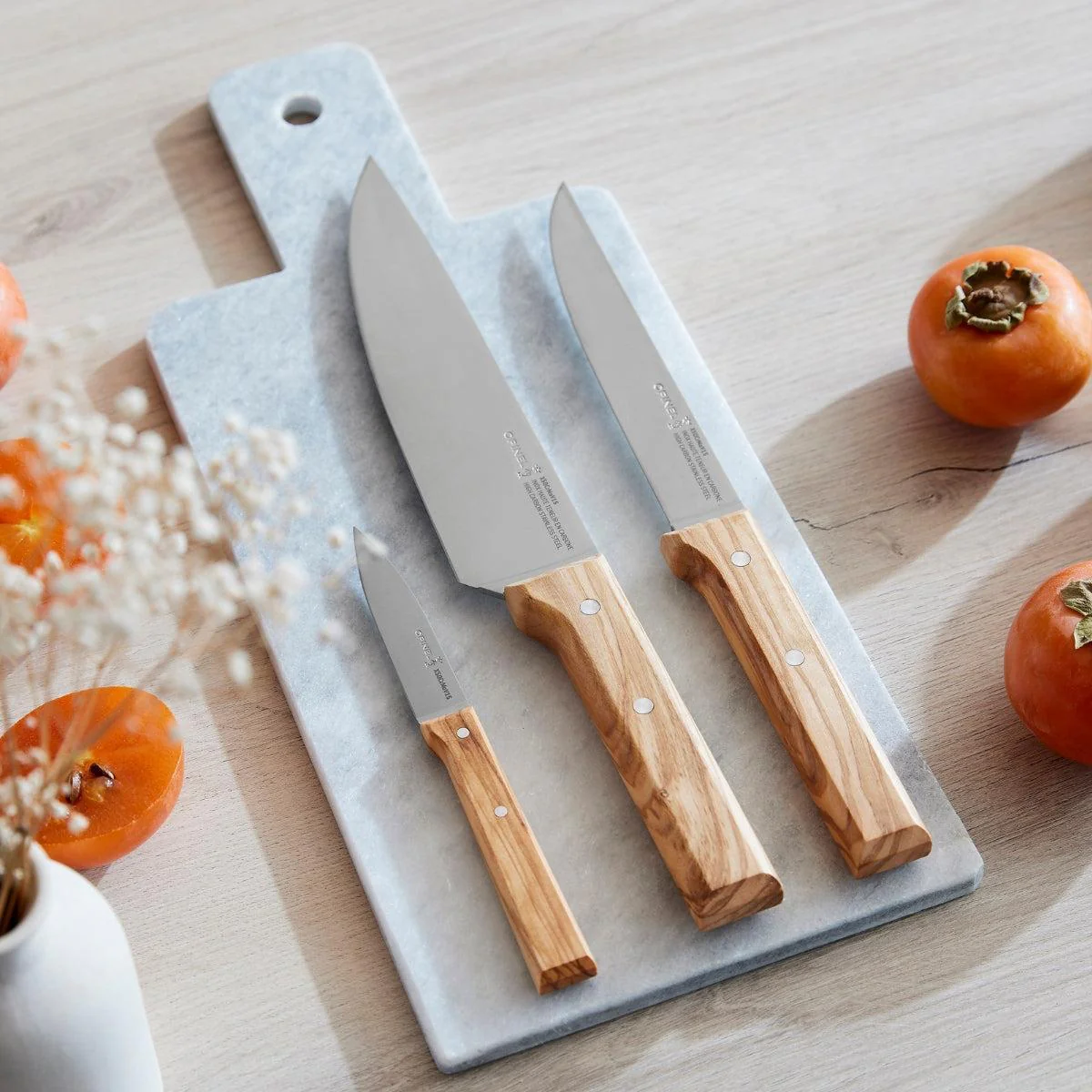
A knife is only as good as how it feels in your hand, and Misen puts considerable thought into its handle design. Crafted from a composite material, often a thermoplastic elastomer (TPE), the handle features a matte texture that provides a secure, non-slip grip, even when your hands are wet or greasy. This ergonomic approach minimizes hand fatigue, allowing for extended periods of prep work without discomfort.
One standout feature is the sloped bolster, which naturally encourages a proper pinch grip. This professional grip style, where your thumb and forefinger pinch the base of the blade, offers superior control and stability, making intricate tasks feel more manageable and safer. While some users with smaller hands have noted the handle’s edges can feel a bit squared, especially near the butt, its generous length makes it an excellent choice for those with larger hands, promoting a comfortable and firm hold.
A Blade for Every Task: Popular Misen Knife Types
While the 8-inch Misen Chef’s Knife is often the star of the show and the brand’s flagship product, Misen offers a curated selection of essential blades to equip any home kitchen.
- The 8-inch Chef’s Knife: This versatile workhorse is designed to handle nearly all your cutting needs – chopping, dicing, mincing, and slicing. Its hybrid blade shape makes it adaptable to various techniques.
- The Short Chef’s Knife: Ideal for those with smaller hands or who prefer a more compact blade for greater maneuverability and control in detailed tasks.
- The Paring Knife: Perfect for intricate work like peeling fruits, deveining shrimp, or creating delicate garnishes. Many find Misen’s paring knife particularly comfortable for precision tasks.
- The Serrated Bread Knife: With its extended length and sharp serrations, it glides through crusty bread and soft pastries without tearing.
- The Santoku Knife: A Japanese-style all-purpose knife, known for its straight edge and sheep’s foot tip, excellent for chopping and dicing vegetables with a push cut.
Choosing Your Misen: A Guide to Finding the Perfect Fit
Selecting the right Misen knife is all about understanding your needs and preferences. Consider these factors:
- Your Primary Tasks: If you’re looking for an all-rounder for daily meal prep, the 8-inch Chef’s Knife is a superb starting point. For more delicate work, a paring knife is indispensable.
- Hand Size and Comfort: Experiment with the standard 8-inch chef’s knife or consider the shorter version if you have smaller hands and prioritize control. The grippy composite handle is generally comfortable, but personal feel is key.
- Blade Aesthetics: Misen knives come in a selection of matte handle colors (like blue, black, and gray), allowing you to match your kitchen aesthetic.
- Value Proposition: Misen aims to deliver “high-quality kitchen tools to the masses at better prices”. Their knives are often praised for offering exceptional performance and durability at a consumer-friendly price point, making them a smart investment for home cooks seeking quality without overspending.
“A good knife isn’t just a tool; it’s an extension of the chef’s hand. Misen understands this balance, offering impressive performance that truly elevates the everyday cooking experience without demanding a professional budget.” – Chef Antoine Dubois, Culinary Innovator.
Mastering Your Misen: Essential Usage Techniques
A sharp, well-balanced Misen knife is a joy to use, and adopting a few basic techniques can make your kitchen experience safer and more efficient.
- The Pinch Grip: As mentioned, this is fundamental. Holding the blade between your thumb and forefinger (just in front of the bolster) provides maximum control over the blade’s tip and edge, crucial for precise cuts.
- The Rocking Motion: For chopping vegetables like onions or herbs, a smooth rocking motion with the chef’s knife—keeping the tip on the board and moving the heel up and down—is highly effective. The Misen chef’s knife’s hybrid curvature supports this technique well.
- Clean Slices, Not Smashes: A sharp Misen knife should glide through food with minimal effort. If you find yourself pressing hard or “sawing” through ingredients, it’s a sign your technique might need adjustment or, more likely, your knife needs some attention.
- Safety First: Counter-intuitively, sharp knives are safer than dull ones. A sharp blade requires less force, reducing the chance of slips and accidents. Always keep your free hand’s fingertips tucked back, forming a “claw” grip to protect them.
Keeping Your Edge: Misen Knife Care and Sharpening
To ensure your Misen knife remains a reliable partner for years to come, proper care is paramount.
- Cleaning: Always handwash your knife immediately after use with warm, soapy water. Avoid dishwashers, as the harsh detergents and high heat can dull the edge and potentially damage the handle.
- Storage: Store your knife safely to protect its edge and prevent accidents. Options include a knife block, a magnetic strip, or a blade guard if stored in a drawer.
- Honing vs. Sharpening: These terms are often confused.
- Honing: This process realigns the microscopic edge of your blade, which can bend or roll with regular use. It doesn’t remove steel but rather straightens the edge to restore initial sharpness. Misen recommends honing your knife after every 2-4 uses. A fine-grit ceramic honing rod is ideal for this.
- Sharpening: This involves removing a small amount of steel to create an entirely new, sharp edge. Misen suggests sharpening your knives at least twice a year, or every 3-6 months for heavy use. You can test for dullness by trying to slice a tomato without applying pressure; if it dents or mashes the skin, it’s time for a sharpen.
For those who prefer a hands-on approach, Misen recommends using Japanese water stones (whetstones) for sharpening, as they offer precise control over the blade’s edge. If self-sharpening isn’t your preference, Misen also offers a convenient mail-in sharpening service, providing freshly sharpened loaner knives so you don’t miss a beat in the kitchen.
The Misen Advantage: Why Invest in This Culinary Companion
Choosing a Misen knife means investing in more than just a piece of steel; it’s about upgrading your entire cooking experience. The brand’s dedication to high-quality materials, thoughtful hybrid design, and a focus on user comfort translates into several key advantages:
- Exceptional Performance: Misen knives are consistently praised for their out-of-the-box sharpness and impressive edge retention, making cutting tasks effortless and enjoyable.
- Outstanding Value: By offering professional-grade features and materials at a more accessible price point, Misen democratizes access to quality kitchen tools.
- Durability and Longevity: With its high-carbon AUS-10 steel and full-tang construction, a Misen knife is built to withstand the rigors of daily use and, with proper care, last a lifetime.
- Customer Support: Misen stands behind its products with a 60-day in-home trial and a lifetime guarantee, alongside convenient sharpening services, ensuring peace of mind for their customers.
Frequently Asked Questions (FAQ)
Q: Are Misen knives good quality?
A: Yes, Misen knives are generally considered good quality, especially for their price point. They use AUS-10 Japanese steel and combine design elements from both German and Japanese knives, resulting in sharp, durable, and well-balanced blades.
Q: What kind of steel is used in Misen knives?
A: Misen knives primarily use AUS-10 Japanese high-carbon steel, known for its excellent edge retention and durability. Earlier models might have used AUS-8 steel.
Q: How often should I sharpen my Misen knife?
A: Misen recommends sharpening your knives 2-3 times a year for moderate use, or every 3-4 months for heavy use. Honing, which realigns the blade’s edge, should be done more frequently, ideally after every 2-4 uses.
Q: Where are Misen knives manufactured?
A: Misen knives are manufactured in China, specifically outside Shanghai, using imported Japanese steel for their blades.
Q: Do Misen knives come with a warranty?
A: Yes, Misen offers a 60-day in-home trial with a no-questions-asked return policy and a lifetime guarantee on their knives.
Conclusion
In a world where culinary aspirations meet everyday realities, the Misen knife stands out as a beacon of intelligent design and accessible quality. It offers a compelling blend of premium materials, thoughtful craftsmanship, and user-friendly features that empower home cooks to elevate their skills without emptying their wallets. Investing in a Misen knife isn’t just about buying a tool; it’s about embracing a philosophy that believes everyone deserves to experience the joy and efficiency of a truly great blade in their kitchen. So, if you’re ready to transform your cooking prep and add a reliable, high-performing Misen knife to your collection, you’re not just buying a knife – you’re investing in a smarter, sharper culinary future.
|
Our Picks for the Best Chefs Knife in 2026
As an Amazon Associate I earn from qualifying purchases.
|
||
| Num | Product | Action |
|---|---|---|
| 1 | Mercer Culinary M22608 Millennia Black Handle, 8-Inch, Chef\'s Knife |

|
| 2 | HENCKELS Classic Razor-Sharp 8-inch Slicing Knife, German Engineered Informed by 100+ Years of Mastery, Stainless Steel |
|
| 3 | imarku Japanese Chef Knife - Sharp Kitchen Knife 8 Inch Chef\'s Knives HC Steel Paring Knife, Unique Gifts for Men and Women, Gifts for Mom or Dad, Kitchen Gadgets with Gift Box, Gyutou Knives |
|
| 4 | MOSFiATA 8\" Super Sharp Professional Chef\'s Knife with Finger Guard and Knife Sharpener, German High Carbon Stainless Steel EN1.4116 with Micarta Handle and Gift Box |
|
| 5 | Shun Premier 8\" Chef\'s Knife, Handcrafted Japanese Kitchen Knife for Professional and Home Chefs, VG-MAX Core with Damascus Stainless Steel Cladding, Pakkawood Handle |
|
| 6 | PAUDIN Chef Knife, 8 Inch High Carbon Stainless Steel Sharp Kitchen Knife with Ergonomic Handle, Gift Box for Family & Restaurant |
|
| 7 | HOSHANHO Kitchen Knife in Japanese High Carbon Steel, Professional High-Class Chef\'s Knife 8 inch, Non-slip Ultra Sharp Cooking Knives with Ergonomic Handle |
|
| 8 | Victorinox Swiss Army 5.2063.20-X14 Fibrox Chef\'s Knife Black 8 in |
|
| 9 | Matsato Chef Knife - Perfect Kitchen Knive for Cooking, Chopping. Japanese Steel Knife for Home, BBQ. For Balance & Control, 6.3 Inch |
|
| 10 | HOSHANHO 7 Inch Nakiri Knife, Japanese High Carbon Stainless Steel Chef Knife, Multipurpose Meat Vegetable Sharp Kitchen Knife with Ergonomic Pakkawood Handle |
|