Stepping into the kitchen, whether you’re a seasoned chef or just starting your culinary journey, there’s one tool that truly anchors your cooking experience: the chef knife. It’s more than just a piece of cutlery; it’s an extension of your hand, a partner in creating delicious meals. Finding the Best Chef Knife can transform your kitchen tasks from tedious chores into an enjoyable dance of precision and efficiency. But with countless options out there, how do you pick the perfect one for you? Let’s slice through the confusion and find your ideal culinary companion.
The Storied Journey: A Brief History and Evolution of the Chef’s Knife
The concept of a versatile cutting tool in the kitchen isn’t new; it’s a tale as old as cooking itself. Early “chef knives” were simple, robust blades designed for butchering large cuts of meat, often without the elegant curves we see today. Over centuries, as culinary arts evolved and kitchens became more sophisticated, so did the chef’s knife. European blacksmiths, particularly in Germany and France, refined its design, giving us the heavy, broad-bladed knives ideal for a powerful rocking chop. Meanwhile, in Japan, a different philosophy emerged, focusing on thinner, harder, and exquisitely sharp blades for precise cuts, influenced by the art of samurai sword making. Today, the best chef knife often blends these traditions, offering a fusion of strength and finesse tailored for the modern cook.
Understanding Your Workhorse: What Defines a Chef’s Knife?
At its heart, a chef’s knife is the ultimate kitchen multi-tasker. It’s designed to be your go-to for about 90% of your cutting needs, from finely dicing an onion to breaking down a chicken. Its signature broad blade and gently curved profile allow for both the powerful “rocking” motion favored in Western cooking and the precise push-cut common in Eastern styles. This versatility is what makes it indispensable. While specialty knives certainly have their place, a high-quality chef’s knife is the foundation of any well-equipped kitchen, enabling you to tackle nearly any ingredient with confidence.
The Anatomy of Excellence: Key Components and Materials of a Chef’s Knife
To truly appreciate what makes the best chef knife, it helps to understand its fundamental parts and the materials that bring them to life.
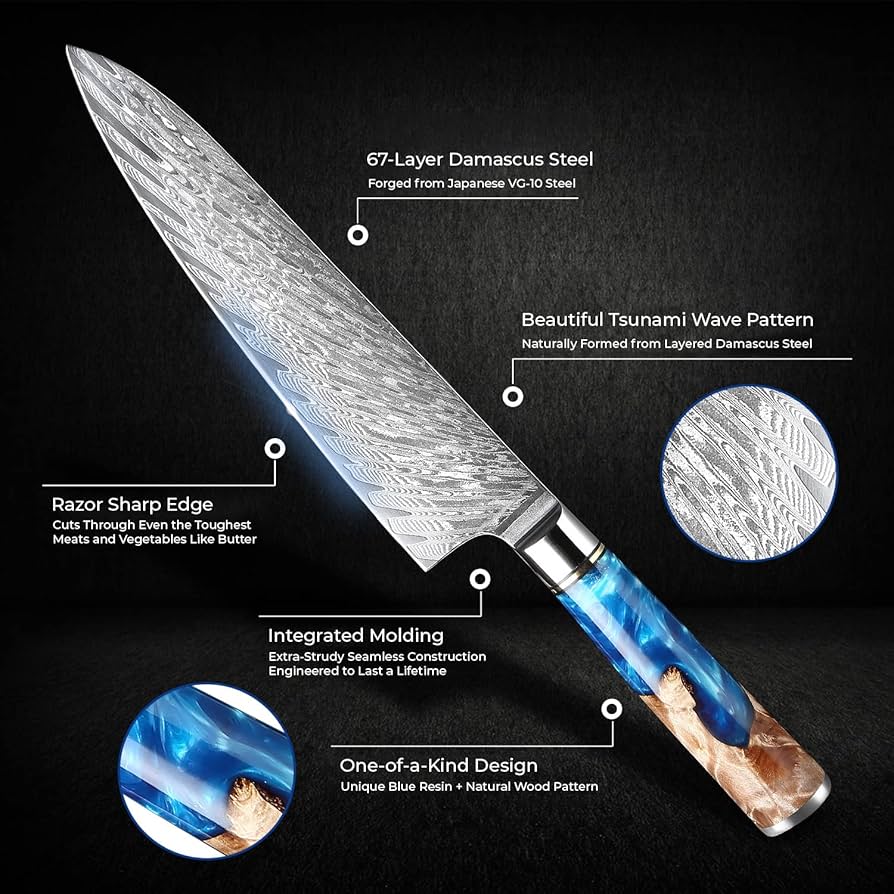
Blade Materials: The Heart of the Cut
The material of your knife’s blade dictates its sharpness, edge retention, and maintenance needs.
- High-Carbon Stainless Steel: This is the darling of modern knife-making, combining the best of both worlds. It offers excellent hardness and edge retention thanks to its carbon content, while chromium provides crucial rust resistance. Most top-tier chef knives today are crafted from this balanced alloy.
- Carbon Steel: Prized for its ability to take and hold an incredibly sharp edge, carbon steel blades are a favorite among traditionalists and many professional chefs. However, they require meticulous care, as they are more prone to rust and discoloration if not cleaned and dried immediately after use. “Carbon steel blades develop a beautiful patina over time, a visual testament to countless culinary adventures, but they demand respect and diligent care,” advises Chef Leo Dubois, a celebrated culinary instructor.
- Stainless Steel: While highly rust-resistant and durable, traditional stainless steel is softer than carbon steel, meaning it won’t hold an edge for as long and requires more frequent sharpening. These are often found in more budget-friendly options.
- Ceramic: Extremely lightweight and razor-sharp, ceramic blades are impervious to acids and rust. Their significant drawback is their fragility; they can chip or shatter if dropped or used on hard items like bones. They also require specialized sharpening tools.
Blade Construction: Built to Last
The way a knife is constructed significantly impacts its balance, durability, and overall feel.
- Forged Knives: These are made from a single bar of steel heated and hammered into shape. This process creates a stronger, thicker blade with a bolster (the thick part where the blade meets the handle) and a full tang. Forged knives are typically heavier and more robust.
- Stamped Knives: These are cut from a sheet of steel, then heat-treated and sharpened. They tend to be lighter, more flexible, and often lack a bolster, which can make them easier to handle for long periods for some users. While generally more affordable, quality stamped knives can still perform exceptionally well.
- Full Tang vs. Partial Tang: A “full tang” means the blade’s metal extends all the way through the handle, providing superior balance and durability. You’ll often see the metal visible between handle scales. Partial tang knives have the metal extending only partway into the handle, which can compromise balance and strength. For any serious cook, a full tang is a non-negotiable feature in the best chef knife.
- Bolster: This thick band of metal at the junction of the blade and handle adds balance and acts as a finger guard. While beneficial for safety and feel, a full bolster can add weight and make sharpening the entire blade length more challenging.
The World of Chef Knives: Popular Types and Their Characteristics
When exploring the best chef knife, you’ll primarily encounter two main styles, each with distinct characteristics influenced by their cultural origins:
German-Style Chef’s Knives
These knives are known for their robust build and impressive durability. Typically heavier and thicker, German-style knives feature a pronounced curve along the blade (often called a “belly”), making them ideal for a “rocking” chop motion, perfect for quickly mincing herbs or dicing vegetables. They often come with a full bolster for a comfortable, secure grip and are excellent for tougher tasks like breaking down poultry or cutting through hard root vegetables. The Wüsthof Classic 8-Inch Chef’s Knife is a prime example, lauded for its sturdy nature and balanced weight.
Japanese-Style Chef’s Knives
In contrast, Japanese-style chef’s knives are generally lighter, thinner, and crafted from harder steel, allowing for an incredibly sharp edge and precise cuts. While they may require a bit more care due to their harder, potentially more brittle steel, their superior sharpness makes delicate tasks effortless. Common Japanese chef knife variations include:
- Gyuto: The Japanese equivalent of a Western chef’s knife, often with a slightly flatter profile and thinner blade, excelling at slicing and push-cutting.
- Santoku: Meaning “three virtues” (slicing, dicing, mincing), the Santoku typically has a straighter edge and a “sheep’s foot” tip, ideal for an up-and-down chopping motion.
- Nakiri: A vegetable knife with a perfectly straight blade, designed for efficient push-cutting.
The MAC Professional 8 Inch Hollow Edge Chef’s Knife is a fantastic Japanese-style option, praised for its lightweight design, balance, and lasting sharpness. Similarly, the Shun Classic 8-Inch Chef’s Knife, with its Damascus steel construction, offers exceptional precision and a beautiful design.
Your Perfect Match: How to Choose the Best Chef Knife for Your Needs
Choosing the best chef knife is a highly personal journey. What feels right for one cook might not for another. Here’s what to consider:
1. Fit and Feel: The Personal Connection
This is paramount. The knife should feel like a natural extension of your hand. “Always try to hold a knife before you buy it,” suggests Chef Leo Dubois. “Pay attention to the handle shape, the grip, and how it feels in your hand. Does it poke? Is it too bulky? Your comfort directly impacts your control and safety.” A well-balanced knife won’t feel blade-heavy or handle-heavy when you hold it in your preferred grip.
2. Blade Length: Size Matters (Sometimes)
Chef knives commonly range from 6 to 12 inches.
- 6-8 inches: Great for home cooks, those with smaller hands, or kitchens with limited space. They offer more maneuverability.
- 8-10 inches: The most common and versatile length for both home cooks and professionals, providing ample blade for most tasks and efficient rocking motion.
- 10-12 inches: Preferred by professional chefs or those who frequently break down large cuts of meat or produce, offering maximum leverage and reach.
3. Edge Geometry and Thinness: The Secret to Effortless Cutting
A knife that cuts well isn’t just about its sharpness, but how thin the blade is behind the edge. A thinner blade experiences less resistance as it passes through food, resulting in cleaner, more effortless cuts. While a more acute edge angle helps, the “behind the edge thickness” has a larger impact on perceived sharpness.
4. Budget: An Investment in Your Culinary Journey
A good chef knife is an investment, but a worthwhile one. Expect to pay anywhere from $75 to $200 or more for a high-quality knife that will last for decades with proper care. Budget-friendly options like the Victorinox Fibrox 8-Inch Chef’s Knife still offer impressive performance for their price point.
Mastering Your Blade: Basic Holding and Using Techniques
Proper technique isn’t just about efficiency; it’s about safety and getting the most out of your best chef knife.
The Pinch Grip
This is the most common and recommended grip for a chef’s knife. You “pinch” the base of the blade (where it meets the handle) between your thumb and forefinger, while your remaining fingers wrap comfortably around the handle. This grip offers superior control and balance, allowing you to guide the blade precisely. “The pinch grip gives you command over the blade, making every cut deliberate and safe,” says Chef Dubois.
Rocking vs. Push-Cut Motion
- Rocking Motion: Common with German-style knives, the blade’s tip stays in contact with the cutting board while you rock the knife up and down, pushing it forward through the food. This is excellent for mincing and chopping.
- Push-Cut: Often used with flatter Japanese-style blades, this involves pushing the knife straight down and forward through the food, lifting the entire blade after each cut.
Keeping It Sharp: Maintenance, Cleaning, and Sharpening Your Chef Knife
Even the best chef knife needs love and care to perform at its peak.
Cleaning
Always hand-wash your chef’s knife immediately after use with warm, soapy water and dry it thoroughly. Leaving it to air-dry or soaking it can lead to water spots, corrosion, or even rust, especially with carbon steel blades. Avoid the dishwasher, as the harsh detergents and high heat can damage the blade and handle materials.
Honing vs. Sharpening
These terms are often confused but refer to different processes:
- Honing: This realigns the microscopic edge of a knife that has bent slightly with use. A honing steel is used to gently push the edge back into alignment, keeping your knife feeling sharp between full sharpenings. Do this frequently, perhaps every few uses.
- Sharpening: This actually removes metal from the blade to create a new, sharper edge. Depending on usage, most chef knives need sharpening every month or two for regular users. Options include whetstones (requiring practice), electric sharpeners (fast but can be aggressive), or professional sharpening services.
Storage
Proper storage protects your knife’s edge and keeps you safe. Options include knife blocks, magnetic strips, in-drawer organizers, or blade guards.
The Undeniable Benefits of Investing in a Quality Chef Knife
Why go through all this trouble to find the best chef knife? The benefits are immense:
- Enhanced Efficiency: A sharp, well-balanced knife makes prep work faster and less tiring. You’ll glide through ingredients with ease, saving time and effort.
- Increased Safety: Counterintuitively, a sharp knife is safer than a dull one. Dull blades require more force, increasing the risk of slipping and injury. A sharp knife does the work for you.
- Superior Results: Achieve consistently thin slices, precise dices, and beautiful garnishes that elevate your cooking.
- Greater Enjoyment: Cooking becomes a more pleasant and meditative experience when your tools work with you, not against you.
- Long-Term Durability: A quality chef knife, properly cared for, can be a cherished kitchen companion for a lifetime, a testament to countless meals and memories.
Frequently Asked Questions (FAQ)
What is the primary use of a chef’s knife?
A chef’s knife is the most versatile knife in the kitchen, used for a wide range of tasks including slicing, dicing, mincing, and chopping fruits, vegetables, and meats. It’s considered the workhorse of any knife collection.
How often should I sharpen my best chef knife?
If you use your chef’s knife daily, it’s generally recommended to sharpen it every one to two months, or whenever you notice it struggling to make clean cuts or slipping on ingredients. Regular honing between sharpenings will help maintain its edge.
What’s the difference between honing and sharpening?
Honing realigns the knife’s existing edge by straightening microscopic bends, while sharpening actually removes a small amount of metal to create a new, sharper edge. Honing is a frequent maintenance task, whereas sharpening is done less often.
Can I put my chef’s knife in the dishwasher?
No, it’s strongly recommended to hand-wash your chef’s knife immediately after use with warm, soapy water and dry it thoroughly. Dishwashers can dull the blade, damage the handle, and cause rust or corrosion.
Why are some chef’s knives so expensive?
The price of a chef’s knife often reflects the quality of materials (e.g., high-carbon stainless steel), craftsmanship (e.g., forged full-tang construction), and the reputation of the brand. These factors contribute to better edge retention, balance, durability, and overall cutting performance.
Conclusion
Choosing the best chef knife is more than just a purchase; it’s an investment in your culinary journey. By understanding the nuances of blade materials, construction, and design, and by prioritizing comfort and balance, you can find a knife that truly elevates your kitchen experience. Remember, the right knife, coupled with proper technique and care, will not only make cooking more efficient and enjoyable but also safer. So go ahead, find your perfect blade, and let your culinary creativity shine!