Stepping into the world of Japanese chef knives is like embarking on a culinary adventure, where precision, artistry, and centuries of tradition converge. For any serious cook, whether a seasoned professional or an enthusiastic home chef, the quest for the Best Japanese Chef Knife is more than just buying a tool; it’s an investment in an elevated cooking experience. These blades, revered globally for their exceptional sharpness and exquisite craftsmanship, promise to transform your daily food preparation into a graceful dance of efficiency and enjoyment. Forget the mundane chopping and slicing; with the right Japanese blade, every cut becomes a testament to culinary excellence.
The Enduring Legacy of Japanese Knife Craftsmanship
The lineage of Japanese knives stretches back centuries, deeply rooted in the formidable art of samurai sword making. This ancient heritage imbues each modern kitchen knife with a spirit of meticulous detail and unwavering pursuit of perfection. Unlike mass-produced alternatives, many premium Japanese chef knives are still forged by skilled artisans, often employing techniques passed down through generations. This dedication to craft ensures that every blade is not merely a cutting instrument but a piece of functional art, embodying a rich cultural history. It’s this profound respect for tradition and an unrelenting commitment to quality that truly sets the best Japanese chef knife apart.
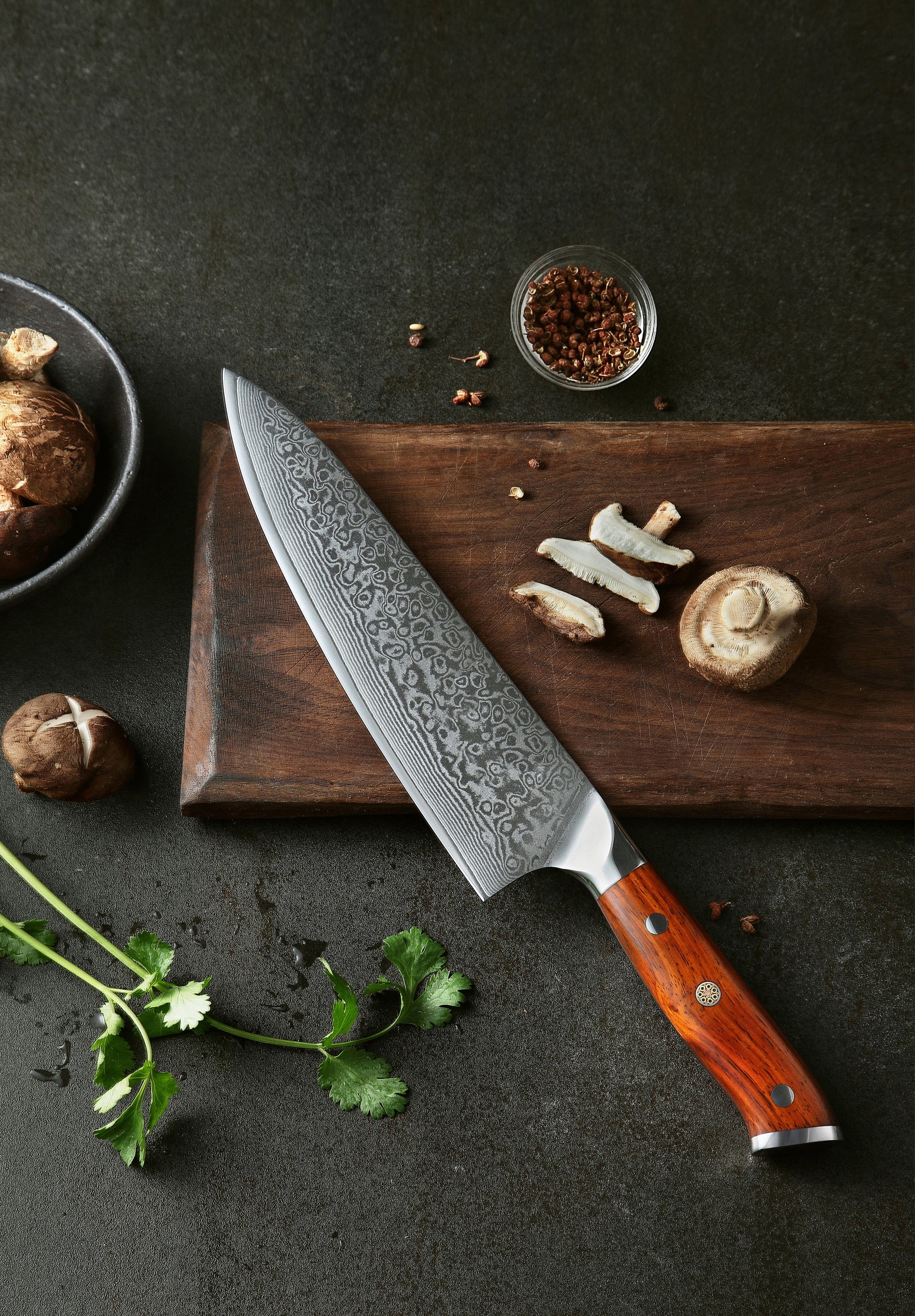
Why a Japanese Chef Knife Stands Apart
What exactly makes a Japanese chef knife such a coveted item in kitchens worldwide? The answer lies in a combination of design philosophies and material science that prioritizes performance and precision.
Razor-Sharp Edges and Superior Edge Retention
Japanese knives are renowned for their incredible sharpness right out of the box, capable of slicing through ingredients with minimal effort. This is primarily due to their harder steel, which allows for a finer, more acute edge angle. This acute angle results in a blade that glides through food, reducing cellular damage and preserving the ingredient’s natural texture and flavor. Furthermore, this harder steel also contributes to superior edge retention, meaning your best Japanese chef knife will stay sharper for longer, diminishing the frequency of sharpening.
Exceptional Balance and Lightweight Feel
While Western knives often feel robust and heavy, Japanese chef knives typically boast a lighter, more agile feel. This reduced weight, combined with meticulous balance, translates into less fatigue during prolonged use and enhanced control over delicate tasks. This ergonomic advantage allows for greater precision and finesse, making intricate cuts feel almost effortless.
The Art of Steel: Hardness and Durability
The core of a Japanese knife’s performance is its steel. Generally, Japanese blades feature a higher Rockwell hardness (often between 58-65 HRC) compared to their Western counterparts (around 54-58 HRC). This increased hardness allows for a thinner blade and a sharper, more durable edge. However, this hardness also means the steel can be more brittle and susceptible to chipping if not handled with care, a trade-off that serious cooks readily accept for superior cutting performance.
Understanding the Heart of the Blade: Japanese Knife Steels
Choosing the best Japanese chef knife involves understanding the various steel types, each offering a unique balance of performance, maintenance, and durability.
Carbon Steel: The Purist’s Choice
For many culinary enthusiasts and professional chefs, carbon steel represents the pinnacle of Japanese knife steel. Blades made from steels like White Steel (Shirogami) and Blue Steel (Aogami) offer phenomenal sharpness and are capable of achieving an incredibly fine edge. They are also easier to sharpen when they do eventually dull.
However, carbon steel is highly reactive and susceptible to rust and discoloration (patina) if not meticulously cared for. This requires immediate cleaning and thorough drying after each use. “The patina a carbon steel blade develops tells a story, a testament to countless meals prepared with passion,” explains Chef Kenji Tanaka, a renowned sushi master from Kyoto. “It’s a living tool that demands respect and rewards with unparalleled performance.” This unique character and superior cutting ability make it the preferred choice for those willing to commit to its specific maintenance needs.
Stainless Steel: The Everyday Warrior
Modern stainless steel options provide an excellent, lower-maintenance alternative for the best Japanese chef knife. These steels, enriched with chromium, are highly resistant to rust and corrosion, making them more forgiving for daily home use. While they might not achieve the absolute razor-edge sharpness of pure carbon steel, high-quality stainless steel Japanese knives offer very good edge retention and a reliable performance for most kitchen tasks. They’re an ideal entry point for those new to Japanese cutlery.
High Carbon Stainless & Powdered Steels: The Best of Both Worlds
A fantastic compromise between carbon and stainless steel is found in high carbon stainless steels like VG-10 and advanced powdered metallurgy steels such as SG2 (also known as R2). VG-10 is a popular choice for many reputable Japanese knife makers, offering a great balance of edge retention, toughness, and stain resistance. SG2/R2 steels are even harder and hold an edge for an exceptionally long time, though they can be more challenging to sharpen.
You’ll also frequently encounter “Damascus steel” in this category. While not a steel type itself, Damascus refers to the beautiful layered patterns created by folding different steels during forging. This technique often involves cladding a harder core steel (like VG-10 or SG2) with softer stainless layers, providing protection to the hard core while adding stunning aesthetics.
Unveiling the Popular Japanese Chef Knife Types
While specialized Japanese knives number in the dozens, a few key types stand out as the best Japanese chef knife options for general culinary applications.
The Versatile Gyuto: Japan’s Take on the Classic Chef’s Knife
The Gyuto, meaning “cow sword,” is the Japanese equivalent of the Western chef’s knife and is arguably the most versatile blade in the Japanese arsenal. Characterized by its moderate curve and pointed tip, the Gyuto is an all-purpose workhorse capable of handling meat, fish, and vegetables with ease. Its length typically ranges from 180mm to 240mm for home cooks, extending to 300mm for professionals, allowing for a comfortable rocking motion during chopping. If you’re looking for a single best Japanese chef knife to do it all, the Gyuto is a prime contender.
The All-Purpose Santoku: The Home Cook’s Favorite
Meaning “three virtues” (referring to its ability to cut meat, fish, and vegetables), the Santoku knife is another excellent all-rounder, particularly favored by home cooks. It features a flatter blade profile and a “sheepsfoot” tip (or slight curve) that promotes a more downward, push-cutting motion rather than the rocking motion of a Gyuto. Shorter and typically broader than a Gyuto, with lengths ranging from 160mm to 180mm, the Santoku is adept at dicing, chopping, and scooping ingredients directly off the cutting board. Its approachable design makes it an extremely popular choice for those seeking a highly functional and beginner-friendly Japanese knife.
Beyond the Basics: Nakiri and Bunka
While the Gyuto and Santoku cover most general tasks, other popular Japanese knives offer specialized advantages. The Nakiri, with its distinctive thin, flat, rectangular blade, is a vegetable master. Its design ensures full contact with the cutting board, making swift, clean cuts through greens and root vegetables effortless. The Bunka, a lesser-known but increasingly popular option, is a versatile blend, often described as a hybrid of a Santoku, Gyuto, and Nakiri. It features a striking “K-tip” (reverse tanto) profile and excels at both general chopping and more delicate, precise tasks. “Many home cooks get overwhelmed by the sheer variety,” explains culinary instructor Ayumi Sato. “But for everyday tasks, a versatile Gyuto or Santoku is often all you need. Understanding their primary strengths helps simplify the choice immensely.”
Choosing Your Perfect Japanese Chef Knife: A Buyer’s Guide
Selecting the best Japanese chef knife for your personal needs involves considering several factors beyond just type of steel or blade shape.
What’s Your Culinary Style?
Think about the types of ingredients you prepare most often. If you frequently chop large quantities of vegetables, a Nakiri might be a fantastic addition alongside a general-purpose blade. If you cook a wide variety of dishes, a Gyuto or Santoku will offer the versatility you need. For those who enjoy intricate butchery or filleting, dedicated knives like a Deba might be considered later, but start with an all-rounder.
Blade Length and Profile: Finding Your Fit
For home cooks, a Gyuto in the 210mm (8.25-inch) range or a Santoku between 165mm-180mm (6.5-7 inches) typically offers a comfortable balance of control and cutting power. Consider your cutting board size and kitchen space when deciding on length. The blade’s profile (how curved or flat it is) will dictate your preferred cutting motion, whether a rocking chop or a push cut.
Handle Comfort: Western vs. Wa-Handle
Japanese knives come with two primary handle styles: Western and traditional Japanese (Wa-handle). Western handles are usually contoured, heavier, and have a bolster, offering a familiar grip to those accustomed to European knives. Wa-handles are typically lighter, made from wood, and come in various shapes (oval, octagonal, D-shaped), providing a unique and often preferred balance for Japanese blades. The choice is purely personal comfort.
Budget and Investment: Quality Over Price
While some premium Japanese knives can reach into the hundreds or even thousands of dollars, excellent quality options are available across various price points. Brands like Tojiro, MAC, and some Miyabi lines offer fantastic performance and craftsmanship within a reasonable budget, making them great entry points into the world of Japanese cutlery. Focus on getting the best Japanese chef knife that fits your budget without compromising too heavily on quality steel and construction.
Single vs. Double Bevel: A Matter of Precision
Most Japanese chef knives, especially those geared towards home cooks, feature a double-bevel edge, meaning both sides of the blade are sharpened, similar to Western knives. This makes them versatile and easier to use. Single-bevel knives, sharpened only on one side (like a chisel grind), are typically reserved for highly specialized tasks such as preparing sushi or sashimi (Yanagiba) or specific vegetable cuts (Usuba). They offer unparalleled precision but require more skill to master and are often designed for right-handed users. For your first best Japanese chef knife, a double-bevel is highly recommended.
Caring for Your Investment: Maintenance Tips for Longevity
To ensure your best Japanese chef knife remains a high-performing tool for years to come, proper care and maintenance are crucial.
Immediate Cleaning and Drying
Never let food residue dry on your blade, especially if it’s carbon steel. Always hand wash your knife immediately after use with warm, soapy water and a soft cloth. Crucially, dry it thoroughly with a clean towel to prevent rust and corrosion, particularly at the blade-handle junction. Dishwashers are an absolute no-go, as their harsh detergents and high heat can damage both the blade and handle.
Sharpening with Whetstones
Unlike Western knives that can often be maintained with a honing steel, Japanese knives truly thrive when sharpened on traditional Japanese whetstones. These stones (available in various grits) gently abrade the steel to create and refine an incredibly sharp edge. Learning to use whetstones is a rewarding skill that allows you to maintain the peak performance of your best Japanese chef knife. A honing rod can be used periodically to realign a slightly dulled edge, but it doesn’t remove material or truly sharpen the blade.
Proper Storage Solutions
Protecting your blade from accidental damage is vital. Store your Japanese chef knife in a way that prevents it from contacting other utensils. Options include a magnetic knife strip, a dedicated knife block with individual slots, blade guards (saya), or a knife roll for transport. This prevents chipping and keeps the edge pristine.
The Unmistakable Benefits of a Quality Japanese Chef Knife
Investing in the best Japanese chef knife is about more than just owning a premium kitchen tool; it’s about unlocking a new level of culinary enjoyment and efficiency. The razor-sharp edge makes prep tasks faster and safer, reducing the likelihood of slips. The precision it offers allows for finer cuts, enhancing food presentation and flavor. Beyond functionality, there’s a profound satisfaction that comes from working with a beautifully crafted instrument that feels like an extension of your hand. It encourages better technique, fosters a greater appreciation for ingredients, and ultimately, elevates the entire cooking journey.
Frequently Asked Questions
What is the primary difference between a Japanese and a Western chef knife?
Japanese chef knives typically feature harder steel, a thinner blade profile, and a more acute edge angle, resulting in superior sharpness and edge retention but requiring more careful handling and specific sharpening techniques. Western knives are generally thicker, softer, and more durable.
Which Japanese chef knife is best for beginners?
For beginners, a double-bevel Santoku (160-180mm) or a Gyuto (210mm) made from high carbon stainless steel (like VG-10) is highly recommended. These options offer excellent versatility, good edge retention, and easier maintenance compared to pure carbon steel.
How often should I sharpen my Japanese chef knife?
The frequency depends on usage and steel type. With regular home use, a quality Japanese chef knife might need sharpening every few months on a whetstone. Regular honing (with a ceramic or fine steel rod, not an aggressive one) can extend the time between full sharpenings.
Can I put my Japanese chef knife in the dishwasher?
No, absolutely not. Dishwashers can severely damage both the blade (causing rust or chipping) and the handle (warping or cracking) due to harsh detergents, high heat, and aggressive washing cycles. Always hand wash and dry immediately.
What’s a “Wa-handle,” and how does it differ from a Western handle?
A “Wa-handle” is a traditional Japanese handle, typically made of wood, and lighter than Western handles. They come in various shapes (octagonal, oval, D-shaped) and offer a different balance point, often preferred for their nimble feel. Western handles are usually heavier, contoured, and have a bolster.
Is a carbon steel Japanese chef knife difficult to maintain?
Carbon steel knives require more maintenance than stainless steel. They must be washed and dried immediately after use to prevent rust and will develop a patina over time. However, this extra care is often rewarded with superior sharpness and ease of sharpening.
Conclusion
The pursuit of the best Japanese chef knife is a journey toward culinary refinement. From the razor-sharp precision of its blade to the rich history embedded in its craftsmanship, a quality Japanese knife is more than just a kitchen tool—it’s an extension of the chef’s passion and a testament to the art of cooking. Whether you opt for the versatile Gyuto, the beloved Santoku, or a specialized Nakiri, understanding the nuances of steel types, blade geometry, and proper care will empower you to choose a knife that elevates your culinary skills. Embrace the tradition, master the maintenance, and let your best Japanese chef knife inspire countless delicious creations in your kitchen.