Imagine a single knife in your kitchen capable of almost every cutting task, from delicate garlic mincing to robust vegetable chopping and even scooping ingredients effortlessly. This isn’t a culinary fantasy; it’s the reality of the Chinese Chef Knife. Often misunderstood and mistakenly labeled as a heavy cleaver, this rectangular marvel is, in fact, one of the most versatile and indispensable tools in the global culinary landscape. It’s a game-changer for home cooks and professional chefs alike, offering a unique blend of efficiency and precision that can transform your cooking experience.
More Than Just a Cleaver: Understanding its True Nature
Let’s clear up a common misconception right away: the traditional Chinese chef knife, or caidao (菜刀) as it’s known in China, is not designed for hacking through thick bones. While its broad, rectangular shape might resemble a Western meat cleaver, its purpose and construction are vastly different. The caidao translates more accurately to “vegetable knife” or “slicing knife,” highlighting its primary role as an all-purpose utility knife. In Japan, it’s known as a chuka bocho, further emphasizing its status as a versatile, everyday kitchen workhorse.
Unlike the heavy-duty cleaver built for brute force, the typical Chinese chef knife features a much thinner, lighter blade with a razor-sharp edge. Its design excels at precision tasks, from finely julienning vegetables to thinly slicing boneless meats and mincing herbs. Think of it as the ultimate multitasking tool, a single blade that can handle nearly all your daily food preparation needs, eliminating the constant need to switch between different knives.
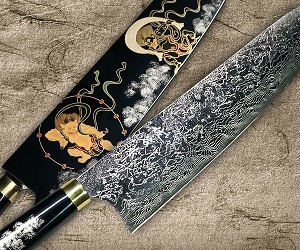
Anatomy of a Chinese Chef Knife: Blade, Handle, and Balance
Understanding the components of a Chinese chef knife reveals why it’s so adept at a multitude of tasks. Its design is a testament to centuries of culinary innovation.
The Blade
The most striking feature is its distinctive rectangular blade. Typically ranging from 7 to 9 inches in length, this blade is notably thinner and lighter than a meat cleaver. It boasts a flat profile along its cutting edge, making it exceptional for push-cutting techniques where the entire blade makes contact with the board. The wide surface isn’t just for aesthetics; it doubles as a practical scoop, allowing you to efficiently transport chopped ingredients from your cutting board directly into your wok or bowl. This design streamlines workflow and minimizes mess, making kitchen tasks more enjoyable.
Blade Materials: Carbon Steel vs. Stainless Steel
The material of your Chinese chef knife’s blade significantly impacts its performance and maintenance.
- Carbon Steel: Traditionally, many Chinese chef knives are crafted from high-carbon steel. These blades are renowned for their incredible sharpness and superior edge retention, meaning they stay sharp for longer between sharpenings. However, carbon steel is reactive and requires diligent care. It can develop a patina over time—a dark, oxidized layer that actually helps protect against rust—but it’s also more susceptible to rust if not cleaned and dried immediately after use.
- Stainless Steel: For those seeking less demanding maintenance, stainless steel options are widely available. While generally not holding an edge quite as long as carbon steel, modern high-carbon stainless steel alloys offer a good balance of sharpness, corrosion resistance, and ease of care, making them an excellent choice for busy home cooks.
The Handle
Handles come in various materials, including traditional wood and more modern synthetic options. A full-tang design, where the blade material extends fully into the handle, is a mark of quality and durability, preventing the handle from loosening or breaking over time.
Balance
A key characteristic that distinguishes the Chinese chef knife is its balance. While Western chef’s knives often have a balance point closer to the handle, many Chinese chef knives are designed with a slightly forward-shifted center of gravity. This forward weight provides extra leverage during chopping, making it surprisingly effortless to slice through tough vegetables like carrots or potatoes.
Mastering the Art: Essential Techniques for Your Chinese Chef Knife
The real magic of the Chinese chef knife unfolds when you learn its unique handling techniques. Don’t be intimidated by its size; with a proper grip and a few basic movements, you’ll be chopping like a seasoned pro in no time.
The Grip
The most common and effective grip is the “pinch grip.” Hold the handle with your dominant hand, then pinch the base of the blade between your thumb and forefinger, just in front of the handle. This provides maximum control and stability, allowing for precise cuts. Your non-dominant hand typically forms a “claw grip,” curling your fingertips inward to guide the blade along your knuckles, keeping them safely out of the way.
Basic Cuts
- The Push Cut: This is the cornerstone technique for a Chinese chef knife. With the knife tip anchored on the cutting board, push the blade forward and down through the ingredient. The flat profile of the blade makes this a remarkably clean and efficient cut for vegetables and boneless meats.
- The Pull Cut: For slightly tougher ingredients, you might start the cut at the heel of the blade and pull it back towards you while pressing down.
- Rock Chopping (Minimal): Unlike the pronounced rocking motion of a Western chef’s knife, the Chinese chef knife typically uses a more subtle, controlled “tap chop.” You lift the knife slightly and bring it down, using its weight to assist in the cut, rather than a sweeping rock.
Beyond Cutting: The Knife’s Versatility
The broad, flat side of the Chinese chef knife is incredibly versatile. It’s perfect for:
- Scooping: Quickly transfer large quantities of chopped ingredients from your cutting board to your pot or pan.
- Crushing: Use the flat side to smash garlic cloves, ginger, or even small spices, releasing their aromatic flavors. As Chef Li Wei, a celebrated figure in Chinese cuisine, often says, “A good caidao is not just for cutting; it’s an extension of your hand for all kitchen tasks, from preparing ingredients to crushing aromatics with a swift, confident press.”
- Tenderizing: The spine (dull top edge) can be used to gently pound and tenderize meat, or to crush tougher aromatics like lemongrass.
Choosing Your Perfect Culinary Companion
Selecting the right Chinese chef knife involves considering several factors to match your cooking style and needs.
Consider Your Needs
Are you primarily slicing vegetables for stir-fries, mincing herbs, or preparing boneless proteins? The standard slicing knife (Piàn Dāo) is excellent for general purposes. If you occasionally need to chop through smaller bones, a dual-purpose knife (Wen Wu Dao) with a slightly thicker heel might be beneficial.
Material Choice
Decide between carbon steel for superior edge performance with more maintenance, or stainless steel for easier care with slightly less aggressive edge retention. High-carbon stainless steel offers a popular middle ground.
Size and Weight
While most are around 7-9 inches, try holding different sizes to find what feels balanced and comfortable in your hand. A well-balanced knife minimizes fatigue during long prep sessions.
Handle Comfort
Consider the handle material and shape. Traditional wooden handles offer a classic feel and good grip, while modern synthetic handles can provide excellent ergonomics and moisture resistance.
Caring for Your Chinese Chef Knife: Longevity in the Kitchen
A high-quality Chinese chef knife can last a lifetime with proper care. Here’s how to keep yours in prime condition:
Cleaning
Always hand wash your Chinese chef knife immediately after use with mild soap and warm water. Never put it in a dishwasher, as harsh detergents and high temperatures can damage the blade and handle.
Sharpening
Maintain its razor-sharp edge with a whetstone. For most Chinese chef knives, a sharpening angle of 15 to 20 degrees per side is ideal. Regular honing with a ceramic or steel honing rod will keep the edge aligned between full sharpenings. “The secret to a sharp blade isn’t just the initial grind, but the consistent, gentle kiss of a honing rod before each use,” advises Master Blade Smith Chen Wei.
Storage
Store your knife in a dry place. A wooden knife block, a magnetic strip on your wall, or a blade guard (saya) will protect the edge and prevent accidents. For carbon steel knives, ensure they are completely dry before storage to prevent rust.
Why Every Kitchen Needs a Chinese Chef Knife
Investing in a quality Chinese chef knife is more than just buying a tool; it’s adopting a philosophy of efficiency and versatility in the kitchen. This single knife can revolutionize your food preparation, making tasks faster, more precise, and ultimately more enjoyable. It encourages a deeper connection with your ingredients and a simpler, more streamlined approach to cooking. From quickly prepping a stir-fry to elegantly dicing vegetables for a vibrant salad, the Chinese chef knife empowers you to tackle almost any culinary challenge with confidence and finesse. It’s a testament to the idea that sometimes, less is more, especially when that “less” is an exceptionally designed, multi-functional piece of culinary artistry.
Frequently Asked Questions About Chinese Chef Knives
Q: Can a Chinese chef knife cut through bones?
A: Generally, no. The typical Chinese chef knife (caidao or slicing knife) has a thin, sharp blade designed for slicing, dicing, and mincing, not for chopping through bones. Attempting to cut bones with it can damage the blade. Heavy bone choppers exist in Chinese cuisine, but they are a distinct, thicker-bladed tool.
Q: What’s the main difference between a Chinese chef knife and a Western chef knife?
A: The most significant difference lies in their design and primary cutting motion. A Chinese chef knife has a rectangular, flatter blade ideal for push-cutting and scooping, while a Western chef knife has a curved blade designed for a rocking motion. The Chinese chef knife is also often seen as more of an all-purpose tool for a broader range of tasks.
Q: How do I maintain a carbon steel Chinese chef knife?
A: Carbon steel knives require immediate hand washing and thorough drying after each use to prevent rust. They will also develop a natural patina over time. Regular sharpening with a whetstone and honing with a rod are essential to maintain its edge.
Q: Is it difficult to learn how to use?
A: While its appearance might be intimidating, learning to use a Chinese chef knife is quite intuitive. Mastering the pinch grip and basic push-cutting technique can be achieved quickly with practice. Many find its broad blade and forward balance surprisingly comfortable and efficient.
Q: What does “caidao” mean?
A: “Caidao” (菜刀) literally translates to “vegetable knife” in Mandarin, accurately reflecting its primary role in Chinese kitchens as a versatile knife for preparing vegetables and other ingredients.
Embrace the Versatility
The Chinese chef knife stands as a monument to minimalist efficiency in the kitchen. It’s a tool that challenges conventional notions of knife design and offers a refreshing, highly effective approach to food preparation. By understanding its true purpose, mastering its simple yet powerful techniques, and committing to its care, you’re not just adding a knife to your collection; you’re inviting a centuries-old culinary tradition into your home. Embrace the versatility, and let the Chinese chef knife unlock new levels of precision and enjoyment in your daily cooking.