Stepping into the world of Japanese culinary tools is like unlocking a new level of precision and artistry in your kitchen. For centuries, Japanese bladesmiths have honed their craft, transforming simple steel into instruments of unparalleled sharpness and balance. A well-chosen Japanese Kitchen Knife Set isn’t just a collection of tools; it’s an investment in your cooking journey, promising to elevate every slice, chop, and dice. If you’ve ever admired the effortless cuts of a sushi chef or dreamed of vegetables gliding apart with minimal effort, you’re ready to explore the unique qualities that make these knives a global culinary phenomenon. This guide will walk you through everything you need to know, from the rich history and diverse types to essential care and how to choose the perfect set for your kitchen.
What Makes Japanese Kitchen Knives Special?
The allure of Japanese kitchen knives stems from a legacy deeply intertwined with samurai sword-making traditions, emphasizing meticulous craftsmanship, superior materials, and a relentless pursuit of sharpness. Unlike their heavier Western counterparts, Japanese knives are typically forged from harder steel, allowing for thinner blades and finer edge angles. This translates to an incredibly sharp edge that delivers clean, precise cuts, preserving the integrity and flavor of your ingredients.
Japanese knives often feature a distinct balance, frequently favoring the blade, which encourages a controlled, delicate cutting motion. The handles, too, differ, with traditional “Wa-handles” providing a unique feel and grip that many chefs find enhances their technique. This combination of heritage, advanced metallurgy, and ergonomic design results in a cutting experience that is both efficient and profoundly satisfying, transforming everyday cooking into an art form.
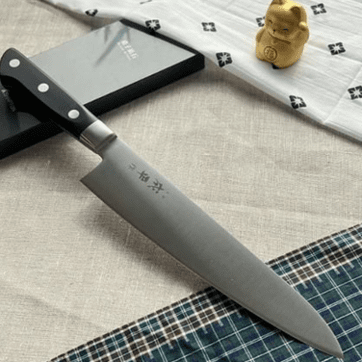
Unpacking Your Japanese Kitchen Knife Set: Key Components and Materials
Understanding the fundamental elements of a Japanese knife is crucial to appreciating its quality and selecting the right tools for your culinary adventures.
The Heart of the Blade: Steel Types
The performance of any knife hinges on its steel. Japanese bladesmiths primarily work with two broad categories:
- Carbon Steel: These steels, such as Shirogami (White Steel) and Aogami (Blue Steel), boast exceptional hardness, leading to incredibly sharp edges and superior edge retention. They are also remarkably easy to resharpen, a quality highly prized by professional chefs. However, carbon steel knives require diligent care; they are prone to rust and discoloration if not immediately cleaned and dried after use. Many enthusiasts cherish the unique “patina” that develops on these blades over time, telling a story of their use.
- Stainless Steel: Modern advancements have brought about high-quality stainless steels like VG-10, AUS-8/10, and Ginsan (Silver 3). These alloys offer a good balance of sharpness and significantly improved rust resistance, making them easier to maintain for the everyday home cook. While they may not achieve the absolute peak sharpness of pure carbon steel, their practicality makes them a popular choice.
- Powder Steel: Representing the cutting edge of knife metallurgy, powder steels like SG2/R2 and HAP40 combine the best of both worlds. They offer extreme hardness, phenomenal edge retention, and a good degree of rust resistance. These premium steels are often found in high-end Japanese kitchen knife sets, though they can be more challenging to sharpen due to their incredible durability.
The hardness of a knife is measured on the Rockwell Hardness Scale (HRC), with Japanese knives often ranging from 60-65+ HRC, significantly higher than most Western knives. This hardness is what allows for their renowned thin, sharp edges.
Handles: Wa vs. Yo
The handle profoundly impacts a knife’s balance and how it feels in your hand:
- Wa-handle: These traditional Japanese handles are often made from natural materials like magnolia wood or ebony. They come in various shapes (octagonal, D-shaped, oval) and are generally lighter, shifting the knife’s balance point towards the blade. This design promotes a “pinch grip” and allows for agile, precise movements.
- Yo-handle: Similar to Western knife handles, Yo-handles are usually full-tang, riveted, and ergonomically shaped. They provide a familiar, comfortable grip for those accustomed to Western knives and often contribute to a more blade-heavy balance.
Blade Geometry: Single vs. Double Bevel
Another defining characteristic is the blade’s grind:
- Single Bevel (Kataba): Traditional Japanese knives like Yanagiba and Deba feature a single-bevel edge, sharpened on only one side. This asymmetrical grind allows for incredibly fine, precise cuts, particularly for delicate tasks like slicing sashimi. Mastering a single-bevel knife requires specific techniques for both cutting and sharpening.
- Double Bevel (Ryoba): Most versatile Japanese knives, including Gyuto and Santoku, have a double-bevel edge, sharpened on both sides. This symmetrical grind makes them easier to use for a broader range of tasks and more forgiving to sharpen, making them ideal for home cooks and those transitioning from Western knives.
Popular Knives You’ll Find in a Japanese Kitchen Knife Set
A comprehensive Japanese kitchen knife set often includes a variety of blades, each designed for optimal performance in specific culinary tasks.
The Versatile All-Rounders
These are the workhorses of the Japanese kitchen, capable of handling most daily prep.
- Gyuto (Chef’s Knife): This is Japan’s answer to the Western chef’s knife. With a curved profile, the Gyuto is incredibly versatile, adept at slicing, dicing, and chopping meat, fish, and vegetables. Its length typically ranges from 180mm to 270mm, with shorter lengths (180-210mm) being popular for home cooks.
- Santoku (“Three Virtues”): Meaning “three virtues” (referring to meat, fish, and vegetables), the Santoku is a fantastic all-purpose knife, especially beloved by home cooks. It features a shorter, wider blade than the Gyuto, with a flatter edge that excels at push cuts and chopping. Its compact size and broad blade make scooping ingredients off the cutting board effortless.
- Bunka: A lesser-known but equally versatile knife, the Bunka often features a distinctive “K-tip” (reverse tanto tip). It’s a fantastic hybrid, offering the all-around utility of a Gyuto or Santoku with an added precision point for intricate work.
Specialized Blades
For specific tasks, these knives truly shine.
- Nakiri: The ultimate vegetable knife, the Nakiri has a thin, rectangular blade with a completely flat edge. It’s designed for straight-down chopping motions, making quick work of vegetables and ensuring clean, efficient cuts without the need for rocking.
- Petty: Similar to a Western utility or paring knife, the Petty is a small, agile blade ideal for intricate tasks. Think peeling fruits, trimming smaller vegetables, or precise garnishing. It’s a valuable supplementary knife in any Japanese kitchen knife set.
- Sujihiki: This long, slender slicer is the Japanese equivalent of a carving knife. Its narrow blade minimizes friction, allowing for long, smooth cuts through cooked meats, roasts, and large fish fillets, ensuring clean, uniform slices.
- Deba: A robust, thick-spined knife, the Deba is primarily used for breaking down whole fish and poultry. Its heft helps with precision, but despite its sturdy appearance, it’s generally not recommended for cutting through heavy bones, as the hard, thin Japanese steel can chip.
- Yanagiba: The iconic sashimi knife, the Yanagiba is a long, narrow, single-bevel blade designed for slicing raw fish into delicate, translucent pieces for sushi and sashimi. Its length allows for a single, uninterrupted draw cut, preserving the fish’s texture and presentation.
Choosing the Right Japanese Kitchen Knife Set for Your Needs
Selecting the perfect Japanese kitchen knife set involves a bit of self-reflection about your cooking habits and preferences.
First, consider your primary cooking tasks. Are you a vegetable enthusiast, regularly preparing large quantities of produce? A set featuring a Nakiri or Santoku would be invaluable. Do you frequently break down whole proteins? A Gyuto combined with a Petty might be a great starting point.
Next, evaluate your commitment to maintenance. If you’re willing to meticulously clean and dry your knives immediately after use and enjoy the sharpening process, carbon steel offers unparalleled performance. If convenience and rust resistance are higher priorities, a high-quality stainless or powder steel set is a fantastic choice.
Handle preference also plays a role. If you’re transitioning from Western knives, a Yo-handle might feel more familiar initially. However, many find the lighter, traditionally shaped Wa-handles enhance their grip and control over time.
Finally, balance quality with your budget. While a premium Japanese knife set can be a significant investment, many reputable brands offer excellent starter sets that provide essential knives without breaking the bank. Sometimes, investing in one or two high-quality all-purpose knives (like a Gyuto or Santoku) and a Petty knife is more effective than a large, lower-quality set. The key is to choose knives that will genuinely enhance your cooking experience and last for years to come.
Mastering the Art: Handling and Using Your Japanese Kitchen Knife Set
Japanese knives are designed for precision, and adopting proper handling and cutting techniques will maximize their performance and your safety.
The pinch grip is fundamental. Hold the knife by pinching the blade between your thumb and forefinger just in front of the bolster (where the handle meets the blade), with the remaining fingers wrapped around the handle. This grip offers superior control and balance.
Cutting techniques vary depending on the knife type. While Western chefs often use a rocking motion, many Japanese knives, particularly those with flatter profiles like the Santoku or Nakiri, excel with a push cut or draw cut. This involves pushing or pulling the blade straight down and through the food, utilizing the knife’s inherent sharpness rather than brute force. Avoid twisting or torquing the blade, as the incredibly thin, hard edges can be prone to chipping if mishandled.
Always use a forgiving cutting board. Wooden end-grain boards (like hinoki or hiba) are highly recommended as they are gentle on the delicate edges of Japanese knives, helping to preserve their sharpness. Avoid hard surfaces like glass, marble, or even some plastic and bamboo boards, which can dull or chip your blade rapidly.
Longevity and Luster: Care and Maintenance for Your Japanese Kitchen Knife Set
Proper care is paramount to maintaining the performance and beauty of your Japanese kitchen knife set. Treat these blades with respect, and they will serve you faithfully for decades.
Cleaning
The golden rule for Japanese knives is: hand wash immediately after use with mild soap and dry thoroughly. Never, ever put a Japanese knife in a dishwasher. The harsh detergents, high temperatures, and jostling can severely damage the delicate edge, corrode the steel, and warp wooden handles. For carbon steel knives, immediate drying is even more critical, as rust spots can form within minutes if left wet. For long-term storage or extra protection, especially for carbon steel, a light coating of food-safe mineral oil or camellia oil (tsubaki abura) can prevent moisture from reaching the blade.
Sharpening
A sharp knife is a safe and effective knife. For Japanese knives, whetstones (sharpening stones) are the preferred method. They allow you to precisely control the sharpening angle and create an incredibly fine edge. A basic whetstone set typically includes a coarse stone (e.g., 400-600 grit) for repairing nicks or establishing an edge, a medium stone (1000-2000 grit) for everyday sharpening, and a fine stone (3000-8000 grit) for polishing and refining the edge to razor-like sharpness. Aim for a consistent angle of 10-15 degrees per side for most double-bevel Japanese knives. While pull-through sharpeners can offer convenience, they often remove too much steel unevenly and aren’t recommended for maintaining the fine edges of high-quality Japanese knives. Regular honing with a ceramic or fine steel rod can help maintain the edge between full sharpenings.
Storage
Proper storage protects your blades and prevents accidents. Knife blocks, magnetic knife strips, and knife rolls (saya) are excellent options. If using a magnetic strip, place the knife spine-first to avoid scratching the blade. Saya (wooden sheaths) are perfect for individual knives, especially single-bevel blades, as they protect the edge and allow for safe transport. Avoid tossing knives unprotected into a drawer, as contact with other utensils can chip or dull the blades.
Is a Japanese Kitchen Knife Set Worth the Investment?
You might wonder if the perceived higher cost and specific maintenance requirements of a Japanese kitchen knife set are truly justified. The answer, for many culinary enthusiasts and professionals, is a resounding yes.
Investing in quality Japanese knives is an investment in your culinary skill and enjoyment. The unparalleled sharpness and precision they offer allow for cleaner cuts, which can significantly improve the taste and presentation of your food. Think of perfectly sliced sashimi, paper-thin vegetable garnishes, or effortlessly diced ingredients – these are the hallmarks of a sharp, well-made Japanese knife. Beyond the functional benefits, there’s a profound satisfaction that comes from working with a beautifully crafted tool, one that embodies centuries of tradition and skill. With proper care, these knives are built to last a lifetime, becoming trusted companions on your cooking adventures. They’re more than just kitchen tools; they’re an extension of your culinary passion, inviting you to engage more deeply with the art of cooking.
Frequently Asked Questions about Japanese Kitchen Knife Sets
Are Japanese knives difficult to use for home cooks?
Not at all! While some specialized single-bevel knives require practice, versatile double-bevel knives like the Gyuto and Santoku are very approachable. With a proper pinch grip and mindful cutting techniques, home cooks can quickly adapt and appreciate their superior performance.
How often should I sharpen my Japanese knives?
It depends on usage, but a good rule of thumb is to lightly sharpen on a medium grit whetstone every 1-3 months for regular home use. Honing with a ceramic rod after every few uses can also help maintain the edge between sharpenings.
Can I use a Japanese knife for all types of food?
Most general-purpose Japanese knives like the Gyuto and Santoku are highly versatile and excellent for meat, fish, and vegetables. However, avoid using them for cutting through bones, frozen foods, or very hard items, as their thin, hard edges can be prone to chipping.
What’s a good starter Japanese knife set?
For beginners, a good starter set often includes a versatile all-purpose knife (either a 210mm Gyuto or a 165-180mm Santoku) paired with a small Petty knife. This combination covers most daily kitchen tasks effectively.
What’s the difference between a Gyuto and a Santoku?
The Gyuto is the Japanese equivalent of a Western chef’s knife, with a slightly curved blade ideal for rocking cuts. The Santoku is typically shorter, wider, and has a flatter edge, making it excellent for push cuts and chopping, and often preferred by home cooks for its compact size.
Elevate Your Culinary Journey
A Japanese kitchen knife set offers an invitation to transform your cooking experience, bringing a level of precision, efficiency, and sheer joy that is truly unparalleled. From the nuanced craftsmanship of their steel to the specialized designs for every task, these knives are a testament to a rich culinary heritage. By understanding their unique characteristics, choosing wisely, and committing to proper care, you’ll not only invest in exceptional tools but also in a more mindful and rewarding approach to your time in the kitchen. Embrace the art, master the techniques, and let the exquisite performance of Japanese knives inspire your next culinary masterpiece.