Imagine slicing through a perfectly seared steak with such effortless grace that the meat’s juices remain intact, its texture undisturbed. This isn’t just a dream for culinary enthusiasts; it’s the everyday reality when you wield exceptional Japanese Steak Knives. These aren’t your average table knives; they are precision instruments, born from centuries of masterful blade-making, designed to elevate every bite of your favorite cuts. Investing in a set of Japanese steak knives isn’t merely about acquiring new cutlery; it’s about embracing a philosophy of culinary precision and enhancing your dining experience, turning every meal into a celebration of flavor and finesse.
The Legacy of Precision: A Brief History of Japanese Cutlery
The story of Japanese steak knives is deeply rooted in a rich tradition of craftsmanship that traces back to ancient sword-making. For centuries, Japanese artisans honed their skills in forging incredibly sharp, durable blades, originally for samurai warriors. This pursuit of perfection in metallurgy and geometry naturally transitioned into the culinary world. While the specific steak knife as we know it is a more modern adaptation, its underlying principles—meticulous forging, superior steel, and razor-sharp edges—are direct descendants of this esteemed history. Over time, as Japanese culinary techniques gained global recognition, so too did the demand for knives that could perform with unparalleled precision, leading to the specialized and highly refined Japanese steak knives available today.
The Heart of the Blade: Understanding Japanese Steak Knife Components and Materials
What truly sets Japanese steak knives apart lies within their construction and the materials chosen with obsessive care. Each element contributes to their legendary performance.
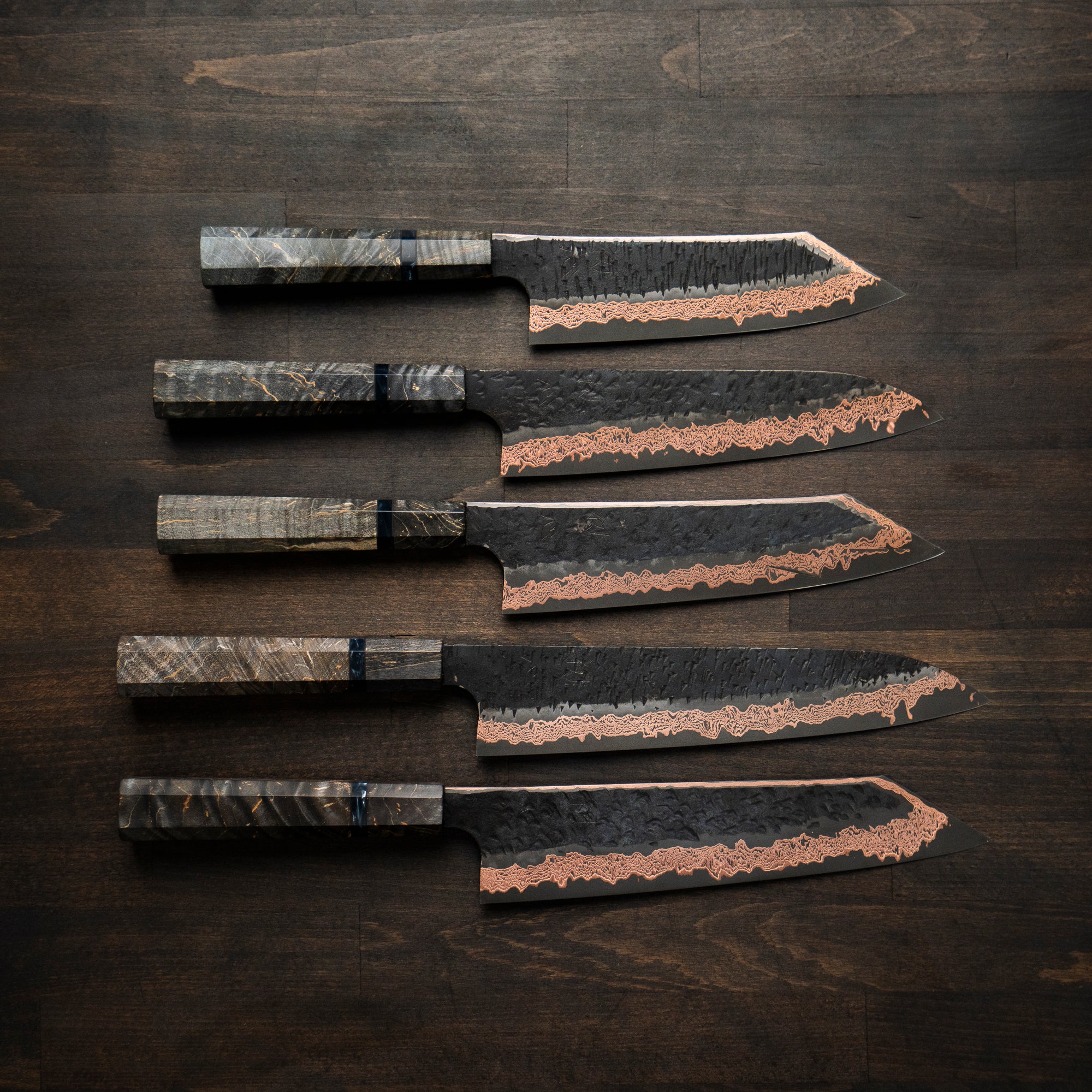
Blade Construction and Steel Types
At the core of any exceptional Japanese steak knife is its blade. Unlike many Western counterparts, Japanese steak knives typically feature a straight, non-serrated edge. This plain edge allows for an incredibly clean cut that slices through meat fibers rather than tearing them, preserving the meat’s natural juices and texture – a difference you can truly taste.
The secret to this sharpness and edge retention lies in the steel. Japanese knife makers often utilize high-carbon stainless steels like VG-10, SG2 (also known as R2), and AUS-10. These steels boast a higher carbon content than typical stainless steels, allowing them to be hardened to an impressive degree (often 60+ HRC on the Rockwell scale). This hardness means the blade can take and hold a much finer, sharper edge for longer periods. Many premium Japanese steak knives also feature a stunning Damascus cladding, where multiple layers of steel are forged together, creating beautiful patterns on the blade. Beyond aesthetics, this layering adds strength and protects the harder core steel, further enhancing durability and performance.
Handle Materials and Ergonomics
A knife is only as good as how it feels in your hand, and Japanese steak knives excel here too. Handles are crafted from a variety of materials, each chosen for comfort, durability, and aesthetic appeal. Common choices include Pakkawood, natural hardwoods, and synthetic composites like G-10. The design prioritizes balance and an ergonomic grip, often favoring traditional Japanese octagonal or D-shaped handles, though Western-style handles are also popular. This thoughtful design ensures maximum control and minimizes fatigue, allowing for precise, effortless cuts even during extended use.
Slicing Perfection: Popular Types and Characteristics of Japanese Steak Knives
When you embark on the journey of exploring Japanese steak knives, you’ll discover a world of refined designs, all sharing a common goal: flawless performance. While there isn’t a single “type” in the way there are Gyutos or Santokus, steak knives from Japan typically feature a slender, agile blade profile, often between 4 to 5 inches in length, designed to navigate the contours of various cuts of meat with ease.
Several renowned brands consistently deliver excellence in the realm of Japanese steak knives:
- Shun: Celebrated for their stunning Damascus-clad blades and VG-MAX steel, Shun knives are often a top choice, balancing exquisite craftsmanship with formidable edges.
- Miyabi: Known for their SG2 micro-carbide powder steel and intricate 100-layer Damascus patterns, Miyabi knives are often considered works of art that offer extreme hardness and edge retention.
- Global: Offering sleek, modern designs, Global Japanese steak knives are known for their seamless, sanitary construction and maintain impressive sharpness.
- Kamikoto & Kyoku: These brands emphasize traditional handcrafting, non-serrated blades, and high-grade Japanese steels like Ibaraki steel or VG10 Damascus, providing razor-sharp edges that cut cleanly without tearing.
Each brand brings its unique approach to the table, but the common thread is an unwavering commitment to sharpness, balance, and quality materials.
The Sharp Choice: A Guide to Selecting Your Ideal Japanese Steak Knives
Choosing the perfect set of Japanese steak knives can feel like a quest, but by focusing on a few key factors, you can find the ideal companions for your dining table.
Consider Your Needs and Budget
First, think about how often you’ll use them and for what purpose. Are they for special occasions, or will they be part of your daily dining ritual? Your budget will naturally guide your choices, but remember that a higher price often reflects superior materials and craftsmanship, leading to better performance and longevity.
Blade Length and Profile
For steak knives, a blade length typically ranging from 4 to 5 inches offers the best balance of maneuverability and slicing capability. Look for a slender profile with a sharp, pointed tip, which aids in piercing and delicate cuts. As discussed, a plain, non-serrated edge is the hallmark of high-quality Japanese steak knives, ensuring a clean, precise cut every time.
Steel Type and Edge Retention
The type of steel profoundly impacts a knife’s performance. For excellent edge retention and corrosion resistance, prioritize knives made from high-carbon stainless steels like VG-10, SG2/R2, or AUS-10. These steels can be sharpened to incredibly fine angles and will hold that edge beautifully. While harder steels offer superior sharpness, they can be more prone to chipping if misused, so handling with care is essential.
Handle Comfort and Balance
Finally, always consider how the knife feels in your hand. An ergonomic handle that fits comfortably and provides a secure grip is paramount for control and safety. The knife should feel well-balanced, neither too blade-heavy nor handle-heavy, allowing it to become a natural extension of your hand.
The Chef’s Touch: Essential Techniques for Using Japanese Steak Knives
Using a Japanese steak knife is an experience in itself, requiring a light, respectful touch to truly appreciate its capabilities.
Start with a proper grip, often a “pinch grip” where your thumb rests on one side of the blade and your index finger on the other, close to the bolster. This provides superior control and balance. When cutting, instead of sawing back and forth aggressively, aim for a smooth, deliberate slicing motion. Let the knife’s inherent sharpness do the work. Imagine gliding through the meat, using minimal pressure to achieve a perfectly clean cut.
It’s equally important to use the right cutting surface. Always opt for cutting boards made of wood or soft plastic. Hard surfaces like glass, ceramic, or granite can quickly dull or even chip your delicate blade, undoing all the masterful craftsmanship.
Preserving the Edge: Care, Cleaning, and Sharpening for Longevity
To ensure your Japanese steak knives remain a treasured part of your dining experience for years to come, proper care is non-negotiable.
Hand Washing and Immediate Drying
The golden rule for all high-quality knives, especially Japanese ones, is never put them in the dishwasher. The harsh detergents, high temperatures, and aggressive tumbling in a dishwasher can irrevocably damage the blade’s edge, corrode the steel, and even warp the handle. Instead, hand wash your knives immediately after use with mild soap and warm water. Then, dry them promptly and thoroughly with a soft cloth to prevent any spots or corrosion. Even “stainless” steel can stain or rust if left wet.
Proper Storage
Protecting the delicate edge when not in use is crucial. Store your Japanese steak knives safely in a knife block, on a magnetic strip, or within blade guards in a drawer. Avoid tossing them loosely in a drawer where they can bump against other utensils, as this can dull or chip the edge.
Mastering the Whetstone
While regular honing can realign a slightly bent edge, true sharpening involves removing a small amount of metal to create a fresh, keen edge. For Japanese knives, the whetstone (or water stone) is the undisputed champion for sharpening.
“Using a whetstone isn’t just about sharpening a knife; it’s about connecting with the blade and understanding its true potential,” advises Master Bladesmith Kenji Sato. “Regular maintenance with a medium-grit stone (around #1000 to #2000) keeps the edge keen for daily use, and a finer grit stone (above #3000) will give you that exquisite, mirror-polished razor sharpness.”
Learning to use a whetstone is a rewarding skill for any knife owner. It allows you to maintain the precise, acute angles that define a Japanese blade, ensuring it performs at its peak.
More Than Just a Cut: The Benefits of Investing in Quality Japanese Steak Knives
Beyond their immediate function, owning a set of high-quality Japanese steak knives brings a multitude of benefits that transcend the dining table:
- Enhanced Dining Experience: The ability to slice through meat with minimal effort transforms every meal, allowing you to truly savor the texture and flavor of your food.
- Precision and Flavor Preservation: A clean cut prevents tearing of meat fibers, which helps to seal in juices and maintain the integrity of the protein, ensuring a more flavorful experience.
- Durability and Heirloom Quality: Crafted from superior materials and with meticulous attention to detail, these knives are built to last a lifetime, becoming cherished pieces that can be passed down through generations.
- Aesthetic Appeal: With their elegant lines, often featuring beautiful Damascus patterns or exquisite handles, Japanese steak knives are not just tools but works of art that enhance your table setting.
- A Connection to Craft: Owning and caring for these knives fosters a deeper appreciation for the ancient art of Japanese blademaking and the culinary traditions they represent.
Frequently Asked Questions
Are Japanese steak knives serrated?
Most high-quality Japanese steak knives feature a plain, straight edge rather than serrations. This design allows for a cleaner, more precise cut that slices through meat fibers, preserving texture and juices, unlike serrated knives which can tear.
What’s the best steel for Japanese steak knives?
Popular choices for Japanese steak knives include high-carbon stainless steels like VG-10, SG2 (R2), and AUS-10. These steels offer an excellent balance of extreme sharpness, superior edge retention, and good corrosion resistance, making them ideal for precision cutting.
Can I put my Japanese steak knife in the dishwasher?
Absolutely not. It is strongly recommended to hand wash Japanese steak knives with mild soap and water immediately after use, then dry them thoroughly. Dishwashers can damage the delicate edge, cause corrosion, and ruin the handle materials.
How often should I sharpen my Japanese steak knives?
The frequency of sharpening depends on how often you use them and the type of steel. Regular honing with a ceramic rod helps realign the edge between sharpenings. For a truly dull knife, periodic sharpening with a quality whetstone is recommended, typically every few months for home users or more frequently for professional use.
What makes Japanese steak knives different from Western ones?
Japanese steak knives typically feature harder steel, which allows for a thinner blade and a finer, more acute edge angle. This results in unparalleled sharpness and precision, enabling effortless, clean cuts that preserve the meat’s integrity, contrasting with the often thicker, more robust, and sometimes serrated blades of Western steak knives.
Conclusion
The journey into the world of Japanese steak knives is one that promises to transform your culinary experiences. From their rich historical lineage rooted in master blademaking to the meticulous selection of high-performance steels and ergonomic handle designs, every aspect of these knives is crafted for excellence. By understanding their unique attributes, selecting the right set for your needs, and committing to proper care and sharpening, you unlock an unparalleled level of precision at your dining table. So, go ahead, elevate your next meal. Embrace the art of the cut with Japanese steak knives, and savor the difference that true craftsmanship makes.