Step into the world of Japanese culinary artistry, and sooner or later, you’ll encounter the legendary Kiritsuke Knife. More than just a cutting tool, this distinctive blade embodies precision, tradition, and a deep respect for ingredients. For aspiring chefs and seasoned home cooks alike, understanding the kiritsuke knife is like unlocking a new level of kitchen mastery. This isn’t just another knife; it’s a statement, a versatile workhorse, and a beautifully crafted piece of history designed to elevate your cooking experience.
A Glimpse into the Kiritsuke’s Rich History
The kiritsuke knife boasts a heritage as sharp and refined as its edge, predating many Western influences in Japanese cutlery. Historically, this revered blade was strictly reserved for the itamae, the executive chef in traditional Japanese kitchens. Wielding a kiritsuke was a symbol of status, authority, and years of honed skill, a testament to the chef’s expertise in handling a diverse range of ingredients with unparalleled precision. The name “Kiritsuke” itself, meaning “to slit open,” subtly hints at its original, versatile purpose.
Born from the artistry of Japanese bladesmithing, the kiritsuke is a fascinating hybrid. It seamlessly blends the characteristics of two specialized Japanese knives: the Yanagiba, a long, slender knife renowned for slicing raw fish for sashimi, and the Usuba, a robust vegetable knife used for precise chopping and peeling. This unique fusion resulted in a single, multi-purpose blade capable of executing a wide array of culinary tasks with remarkable finesse.
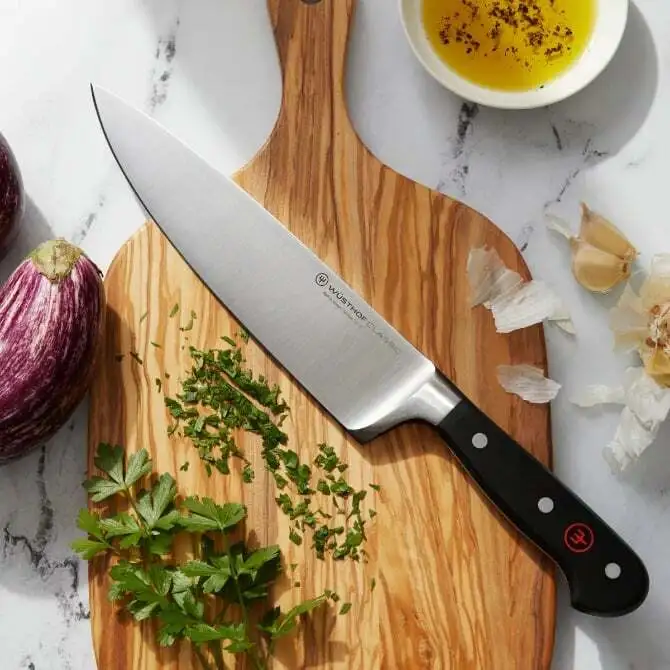
Anatomy of a Kiritsuke: Blade, Bevel, and Beyond
What sets the kiritsuke knife apart from its counterparts is its unmistakable design and meticulous construction. Every element, from the tip to the handle, is crafted for a specific purpose, contributing to its legendary performance.
The Distinctive K-Tip Blade Profile
The most recognizable feature of a kiritsuke knife is its striking blade profile. It showcases a long, relatively flat edge that tapers sharply to an angled, pointed tip. This iconic “K-tip” or “reverse-tanto tip” gives the kiritsuke its aggressive yet elegant appearance. Typically ranging from 210mm to 330mm (about 8.3 to 13 inches), this generous length allows for long, uninterrupted cuts, crucial for achieving pristine slices of fish or vegetables. The flat profile of the blade makes it exceptional for push-cutting, a technique where the knife is pushed straight down and forward, ensuring clean, definitive separations rather than a rocking motion.
Single vs. Double Bevel: A Crucial Distinction
One of the most significant aspects to consider when discussing kiritsuke knives is their bevel. Traditionally, kiritsukes are single-bevel, meaning the blade is sharpened on only one side. This design allows for an incredibly thin, razor-sharp edge, providing unparalleled precision and control, especially for delicate tasks like preparing sashimi or performing intricate vegetable carvings. However, mastering a single-bevel knife requires significant practice and a specific sharpening technique. These knives are also handed, meaning a right-handed chef needs a right-handed single-bevel kiritsuke.
In response to modern culinary demands and to make this exceptional blade more accessible, many contemporary kiritsuke knives are now crafted with a double-bevel edge. These versions are sharpened on both sides, much like Western chef’s knives, offering greater versatility and a more forgiving learning curve. They retain the signature K-tip and overall profile but are easier for home cooks and those accustomed to Western-style knives to wield and maintain.
Materials that Define Excellence
The soul of a kiritsuke knife lies in its steel. Traditional kiritsukes often feature high-carbon Japanese steels like White Steel (Shirogami) or Blue Steel (Aogami). These steels are renowned for their ability to achieve an astonishingly sharp edge and excellent edge retention, albeit requiring diligent maintenance to prevent rust. Modern kiritsukes also utilize premium stainless steels, such as VG-10, AUS-10, SG2, or ZDP-189, which offer a superb balance of sharpness, durability, and corrosion resistance. Many high-end kiritsukes also feature stunning Damascus cladding, layers of different steels forged together to create beautiful patterns, adding both aesthetic appeal and a protective layer to the harder core steel.
Handles: Wa-Style vs. Western Comfort
The handle of a kiritsuke knife significantly impacts its balance and feel. Traditional Japanese knives often feature a “wa-handle,” typically made from wood, which is lighter and shifts the knife’s balance more towards the blade. This design encourages a pinch grip, offering superb control for precise work. Western-style handles, on the other hand, are often heavier and ergonomically shaped, providing a familiar and comfortable grip for those accustomed to European knives. The choice between a wa-handle and a Western handle ultimately comes down to personal preference and comfort.
Mastering the Kiritsuke: What It Excels At
The kiritsuke knife is a true multi-tasker, capable of a wide range of kitchen operations. Its unique design allows it to shine in areas where other knives might falter.
Slicing Sashimi and Sushi
This is where the kiritsuke truly comes alive. Its long, flat, and exceptionally sharp blade makes it perfect for slicing raw fish into delicate, glistening pieces for sashimi and sushi. The length allows for a single, smooth pull-cut, minimizing friction and preventing tearing, resulting in clean, pristine slices that showcase the fish’s natural beauty and texture.
Precision Vegetable Preparation
Thanks to its tall, flat profile and sharp tip, the kiritsuke is a master of vegetable preparation. It excels at intricate tasks such as julienning carrots, dicing onions with surgical precision, or creating paper-thin slices of daikon radish using the traditional katsuramuki technique. Its design enables straight, clean cuts that maintain the integrity of the vegetables.
Effortless Meat Slicing
While often associated with fish and vegetables, the kiritsuke is also excellent for slicing boneless meats. Whether it’s carving a roast, preparing thin slices of carpaccio, or portioning chicken breasts, its keen edge glides through protein with minimal effort, leaving behind uniform, attractive cuts.
What cutting techniques are best for a Kiritsuke knife?
For a kiritsuke knife, the optimal cutting techniques involve push cuts and pull cuts. Unlike Western chef’s knives that favor a rocking motion, the kiritsuke’s flat profile is designed for a straight, downward, and forward (or backward) slicing action. This allows for maximum contact between the blade and the cutting board, ensuring clean, decisive cuts and minimizing lateral pressure on delicate ingredients.
Kiritsuke vs. The Chef’s Knife: A Head-to-Head Battle
It’s natural to compare the kiritsuke knife with the ubiquitous Western chef’s knife, as both are often considered primary kitchen tools. While both are incredibly versatile, they cater to different styles and preferences.
The most noticeable difference lies in their blade shape. A chef’s knife typically features a pronounced curve along its edge, designed for the “rocking” motion common in Western chopping techniques. The kiritsuke, conversely, has a much straighter, flatter profile with its distinctive angled tip, favoring push-cutting.
In terms of bevel, traditional kiritsukes are single-bevel, offering extreme sharpness and precision but demanding more skill to use and sharpen. Chef’s knives are almost always double-bevel, making them more forgiving and versatile for general tasks. Even double-bevel kiritsukes tend to have a thinner grind than most chef’s knives, contributing to their superior slicing ability.
The difficulty factor is also significant. A traditional single-bevel kiritsuke has a steeper learning curve due to its specialized cutting angles and sharpening requirements, often reserved for experienced chefs. A chef’s knife, while still requiring proper technique, is generally more beginner-friendly.
Can a Kiritsuke knife replace a traditional Chef’s knife?
Not entirely. While a kiritsuke knife, especially a double-bevel version, is remarkably versatile and can handle many tasks performed by a chef’s knife, its strengths lie in precision slicing and fine vegetable work. A traditional chef’s knife, with its curved blade, is better suited for rapid rock-chopping and heavy-duty general prep work. Think of them as complementary tools in a well-equipped kitchen, each excelling in its own domain.
Your Guide to Choosing the Perfect Kiritsuke Knife
Investing in a kiritsuke knife is a significant decision, one that should align with your culinary ambitions and practical needs. Here’s how to choose the right one for you:
Assess Your Skill Level
If you’re new to Japanese knives, a double-bevel kiritsuke is often the more accessible starting point. It offers the aesthetic and much of the performance without the steep learning curve of a traditional single-bevel blade. For experienced chefs committed to mastering traditional Japanese techniques, a single-bevel kiritsuke might be the ultimate choice.
Consider Your Primary Culinary Tasks
Are you dreaming of perfect sashimi slices? A single-bevel kiritsuke will deliver unparalleled results. If you need a versatile knife for general cutting, dicing vegetables, and slicing boneless meats, a double-bevel kiritsuke might be more practical for everyday use. Remember, a kiritsuke isn’t designed for brute force tasks like breaking down poultry bones.
Blade Material and Maintenance Preference
Decide between high-carbon steel for superior edge retention and sharpness (accepting the need for meticulous drying and occasional oiling to prevent rust) or stainless steel for easier maintenance and corrosion resistance. Modern powder steels offer a fantastic middle ground.
Find Your Ideal Length and Handle
Kiritsuke knives come in various lengths. A blade around 240-270mm (9.5-10.5 inches) is ideal for most home cooks, offering a good balance of reach and maneuverability. Longer blades (300mm+) are typically preferred by professionals for larger tasks. Experiment with different handle styles – wa-handle or Western – to find what feels most comfortable and balanced in your hand.
Preserving the Edge: Kiritsuke Care and Sharpening
A premium kiritsuke knife is an investment that, with proper care, will last a lifetime. Neglect, however, can quickly diminish its performance and beauty.
The golden rule for any high-quality knife is hand-washing only. Always wash your kiritsuke immediately after use with warm water and mild soap, then dry it thoroughly with a soft cloth. Dishwashers expose knives to harsh detergents, extreme heat, and jostling that can dull the edge and cause rust or warping.
Proper storage is equally vital. Store your kiritsuke in a knife block, a knife sheath, or on a magnetic knife strip to protect its delicate edge from bumps and scrapes. Never toss it unprotected into a drawer.
For sharpening, Japanese whetstones are essential. Avoid electric grinders, which can overheat and damage the blade’s delicate steel. Start with a coarse stone (around 1000 grit) to restore a dull edge, then progress to finer stones (3000-6000 grit) for a razor-sharp, polished finish. Maintaining the correct sharpening angle, typically 15-20 degrees for a single-bevel, is crucial for performance.
For light touch-ups between full sharpening sessions, a ceramic honing rod or a leather strop is recommended. Crucially, avoid standard steel honing rods, especially for single-bevel kiritsukes, as they can chip the fine edge.
Finally, always use your kiritsuke on appropriate cutting surfaces. Wooden or high-quality plastic cutting boards are ideal. Glass, marble, or ceramic surfaces will rapidly dull the blade and can lead to chipping. And remember, this knife is for precision, not power; never use it to cut through bones, frozen foods, or other extremely hard items.
How often should I sharpen my Kiritsuke knife?
The frequency of sharpening your kiritsuke knife depends on usage. For home cooks who use their kiritsuke regularly, honing the edge with a ceramic rod or strop every few uses helps maintain its sharpness. A full sharpening with whetstones is typically recommended every 3-4 months to restore the true edge. Professional chefs, due to more frequent and demanding use, may need to sharpen their kiritsuke knives more often. The key is to sharpen before the knife becomes noticeably dull, meaning if you find yourself applying significant pressure to make cuts, it’s time for a sharpen.
Why a Kiritsuke Knife is a Worthy Investment
“Owning a kiritsuke knife isn’t just about having a tool; it’s about embracing a philosophy of precision and respect in the kitchen,” says Chef Kenji Sato, a third-generation master sushi chef and culinary instructor. “It encourages you to slow down, focus on your technique, and appreciate the beauty of truly clean cuts.”
Investing in a quality kiritsuke knife offers several compelling benefits. Its exceptional sharpness and unique design allow for unparalleled precision, making it a joy to prepare delicate ingredients. The kiritsuke’s versatility means it can handle a wide range of tasks, potentially reducing the number of specialized knives you need. Beyond its functionality, a well-crafted kiritsuke is a piece of art, showcasing exquisite craftsmanship and elegant aesthetics that can elevate your entire cooking experience. It’s a statement piece that reflects a commitment to quality and a passion for culinary excellence, transforming routine kitchen tasks into a more mindful and rewarding endeavor.
Frequently Asked Questions About Kiritsuke Knives
Is a Kiritsuke knife suitable for home cooks?
Absolutely! While traditional single-bevel kiritsukes have a learning curve, modern double-bevel versions are much more accessible for home cooks. They offer the kiritsuke’s unique design and performance benefits with easier handling and maintenance, making them an excellent choice for elevating home cooking.
What’s the difference between a Kiritsuke and a Gyuto?
The primary difference lies in their tips. A Gyuto (Japanese chef’s knife) typically has a pointed tip with a belly curve similar to a Western chef’s knife. A kiritsuke features a distinctive angled “K-tip” or “reverse-tanto tip” and a flatter profile. However, many modern double-bevel kiritsukes are often referred to as “Kiritsuke Gyutos” as they blend the K-tip of a kiritsuke with the overall versatility of a Gyuto.
Can I use a Kiritsuke for rock chopping?
No, a kiritsuke knife is generally not ideal for rock chopping. Its largely flat edge is designed for push and pull cuts, which involve moving the blade straight down and forward or backward. Attempting a rocking motion with a kiritsuke can be awkward, less efficient, and potentially dangerous, as it goes against the knife’s inherent geometry.
What’s the best way to store a Kiritsuke?
The best way to store a kiritsuke knife is to protect its sharp edge. Options include a magnetic knife strip (ensuring it’s placed carefully), a knife block with individual slots, or a blade guard/sheath. Never store it loosely in a drawer where it can collide with other utensils, dulling or damaging the edge.
Are Kiritsuke knives difficult to sharpen?
Traditional single-bevel kiritsuke knives can be challenging to sharpen for beginners, as they require specific techniques to maintain the single-sided edge. However, double-bevel kiritsukes are sharpened more like conventional knives, making them easier to manage. With practice and the right whetstones, sharpening any kiritsuke becomes a rewarding skill.
Embrace the Art of the Kiritsuke
The kiritsuke knife stands as a testament to the enduring legacy of Japanese blade artistry, a tool that transcends mere functionality to become an extension of the chef’s will. From its esteemed history in the hands of master itamae to its contemporary appeal in kitchens worldwide, the kiritsuke offers an unparalleled experience in precision cutting and culinary finesse. Whether you’re slicing delicate sashimi, crafting intricate vegetable garnishes, or effortlessly carving boneless meats, this distinctive blade encourages a mindful approach to cooking, turning every cut into a moment of artistry. Investing in a kiritsuke knife is more than just acquiring a kitchen tool; it’s an invitation to deepen your connection with food, technique, and the rich traditions of the culinary world. Embrace the challenge, savor the precision, and let the kiritsuke knife transform your kitchen into a realm of elevated craftsmanship.